IT Risk Management Best Practices
The Ultimate MSP Guide to IT Risk Management: Process, Common Risk Types, Benefits & Best Practices
Introduction
Assessing and controlling risks like cyber threats, data loss, system failures, and human errors that affect an organization’s IT systems, data, and operations is called risk management.
Risk management is important to reduce the impact and chances of incidents, ensuring the business systems stay secure and reliable.
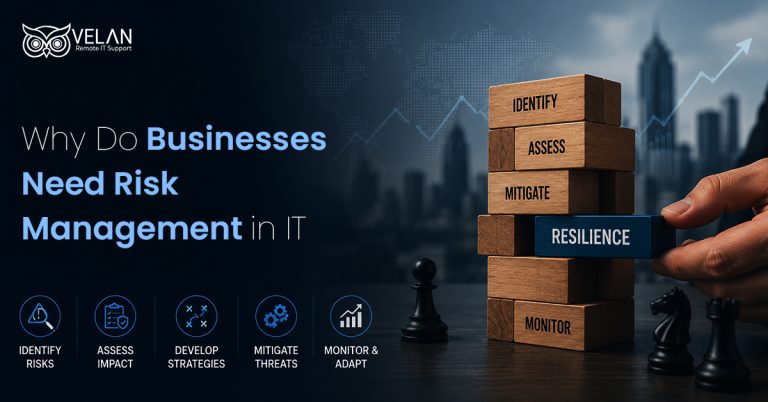
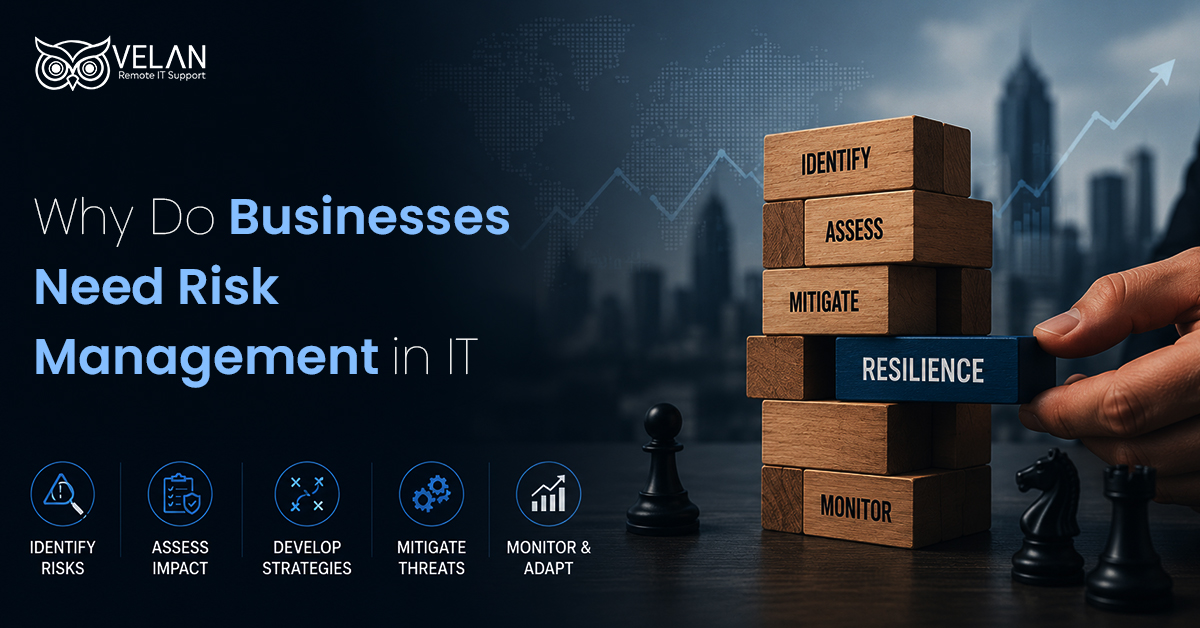
Why Do Businesses Need Risk Management in IT
Businesses that do not have a proper risk management plan in place have a higher risk of cyberattack exposure, affecting compliance, security, and performance. Risk management is applicable to cloud platforms, internal IT infrastructure, data, and applications.
Benefits of Cyber Risk Management
- Stronger protection against cyberattacks and security breaches
- Lower risk of system failures and unexpected downtime
- More informed business decisions through better understanding of potential risks
- Easier alignment with industry standards and regulatory obligations
- Greater stability and quick recovery from IT disruptions
Risk management frameworks enable businesses to continue their operations, minimizing disruptions.
How Does the Risk Management Process Work
Risk management is a structured procedure created based on the impact level and potential threats. It enables businesses to identify and manage risks in a continuous and proactive manner.
The IT Risk Management Process
The risk management process in IT involves
- Creating an inventory of IT assets, systems, and possible security threats
- Evaluating each risk based on its probability and potential business impact
- Ranking identified risks according to their level of priority
- Implementing various controls to prevent or minimize risks
- Continuously monitor and review risks
The regular risk monitoring approach allows businesses to adjust their risk management strategies as technology and security threats change.
Types of IT Risks in Businesses
IT risk analysis and mitigation are needed for the issues that arise from both internal and external factors.
Some of the common IT risks include
- Ransomware, phishing, and malware
- Data loss due to system crashes or manual errors
- Unauthorized access to systems and data
- Unpatched software, systems, and firmware, and vulnerabilities
- Improper system management
- Identifying these gaps earlier can help businesses reduce risks and exposure to threats
IT Risk Management Best Practices
Integrating risk control strategies into routine business workflows helps strengthen overall IT risk management.
- Conducting risk assessments and security audits regularly to identify vulnerabilities
- Creating good risk mitigation plans with effective defense controls and policies.
- Keeping IT systems, applications, and infrastructure updated and properly maintained
- Continuously monitoring networks and systems to detect unusual activity and potential security threats
- Aligning IT risk management strategies with overall business goals and operational needs
IT Risk Management Across Various US Industries
Different industries face unique risks based on their operations, data, and technology they use. Effective risk management supports secure operations, ensuring business continuity.
- Protects production systems and minimizes operational disruptions in manufacturing industries.
- Secures patient data and supports healthcare organizations in following compliance.
- Protects real estate property data, transactions, and customer information.
- Safeguards confidential client data and legal documents.
- Secures IT systems, networks, applications, and cloud environments.
- Protects financial data and reduces cybersecurity and compliance risks.
Learn how Velan helped an Australian healthcare provider transform its clinical operations to be secure and compliant with our remote, IT-managed solutions.
Conclusion
Efficient IT risk management helps businesses stay secure and prepared against cyber threats. Regular risk assessments can protect systems, reduce disruptions, and support safer daily operations.
Reliable MSPs like Velan Remote IT Support offer professional third-party risk management support to businesses of all sizes, including SMEs, startups, and large enterprises. Our team implements the best risk management approaches to help businesses identify IT risks and strengthen security.
Find Your IT Weak Spots Before They Become Costly Problems. Get Risk Assessment From Experts
Velan Remote IT Support helps businesses evaluate their IT environment to identify vulnerabilities and resolve them quickly.
Questions and Answers About IT Risk Management
The risk management service is professional support from a third-party MSP that helps businesses spot, analyze, and control various IT threats. With risk management, businesses can protect assets, ensure compliance, and stabilize daily operations.
Our team helps businesses identify technology risks and security gaps. The service also supports risk assessment and ongoing monitoring to improve overall IT protection.
Velan provides flexible IT risk management support for small businesses. This gives them access to professional expertise without requiring a large internal IT team.
Yes. Businesses in Los Angeles and NY can outsource IT risk management support to Velan Remote IT Support. Our service helps identify vulnerabilities and reduce potential technology-related risks.
We support businesses across major US cities, including New York, Los Angeles, Chicago, Houston, Dallas, Atlanta, Miami, Seattle, Boston, and San Francisco. Our team delivers reliable services across all time zones.
We can provide a customized quotation for risk management based on your business size and IT environment. The scope of our services will also be considered, and we outline all important information in the SLA.
We tailor our services to your requirements. This helps businesses choose suitable risk assessment and management support without paying for unnecessary services.
Categories
- Reports 01
- Azure 02
- AWS 04
- Remote IT Support 03
- Cloud Security 04
- Cloud Services 04
- Managed IT Services 012